Noise-Canceling Headphones Explained: What to Know Before You Buy
Confused by noise-canceling headphones? Learn how ANC works, which features matter, and how to pick the right pair for travel, work, and calls.
How ANC Works
Active noise canceling (ANC) uses tiny microphones to sample your surroundings and a processor to create an equal and opposite waveform that reduces incoming noise before it reaches your ears. It excels at steady, low-frequency sounds like engine rumble or HVAC hum, while quick, high-pitched sounds are harder to suppress and rely more on passive isolation from ear cups or ear tips. There are three main designs: feedforward (mics outside), feedback (mics inside), and hybrid (both), each balancing sensitivity, accuracy, and resilience to wind. A tight seal is crucial; gaps from glasses arms or poor tip choice can slash effectiveness. Some listeners notice a mild pressure sensation during powerful low-frequency reduction; this is normal but varies by person. Features like transparency mode reintroduce outside sound so you can stay aware or converse. Remember, noise cancellation is not total soundproofing; it intelligently reduces distractions so you can keep volumes lower, protect hearing, and focus on music, calls, or work.
Finding the Right Form and Fit
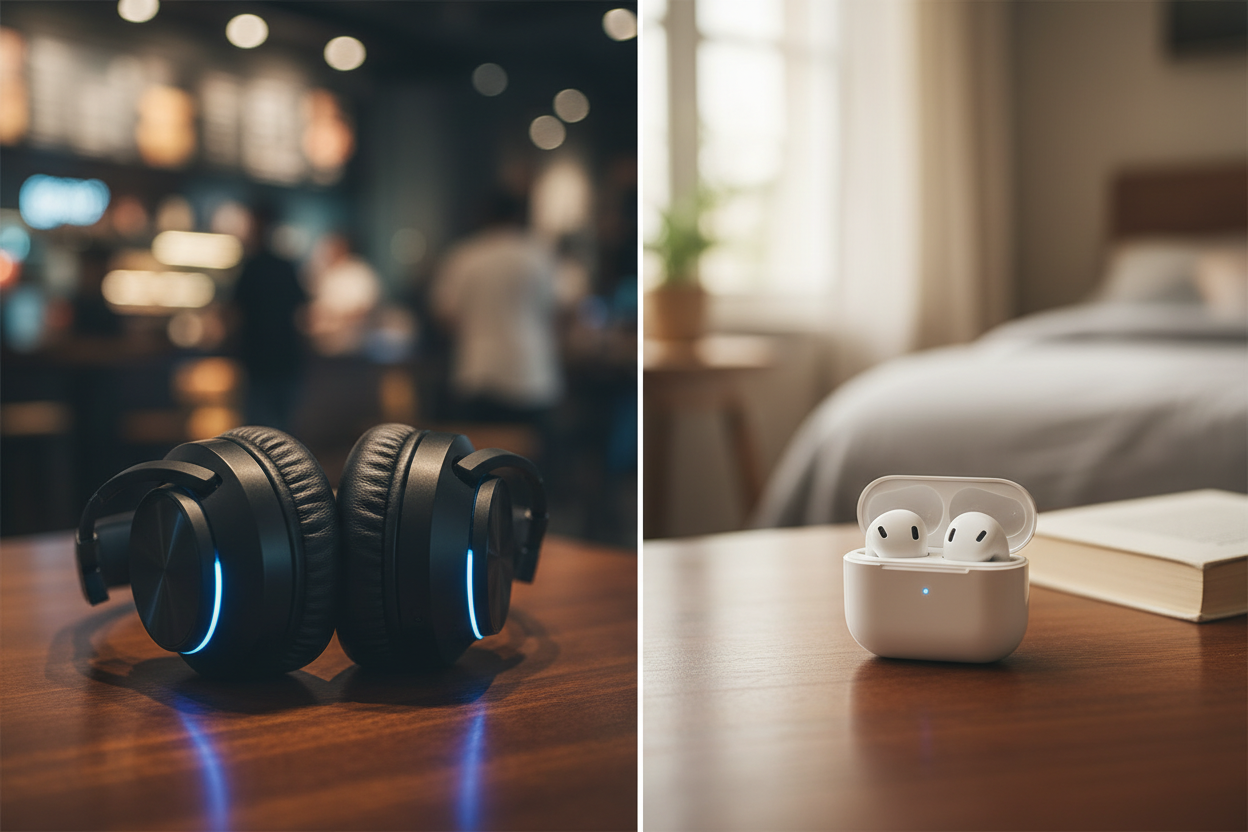
Your comfort and results hinge on form factor and fit. Over-ear models surround the ear, often delivering the strongest passive isolation and most consistent ANC, with plush pads and roomy cups. They can feel warmer and bulkier but typically spread weight well. On-ear designs rest on the ear, saving space yet offering less isolation and potentially more clamping fatigue over long sessions. In-ear options are compact and travel friendly; with the right silicone or foam tips they can outperform bigger designs in isolation, but tip size, shape, and insertion depth matter enormously. Consider clamping force, headband padding, ear cup depth, and swivel to accommodate different head shapes, glasses, or hairstyles. Test for a reliable seal by gently moving your jaw or turning your head; the sound should remain consistent. For workouts, look for a secure fit and sweat resistance, and be aware of the occlusion effect—your footsteps may sound amplified. A protective case, fold-flat hinges, and manageable weight smooth daily carry.
Sound Quality Considerations
Noise cancelation is only part of the story; overall sound quality comes from tuning, drivers, and processing. Look for a balanced frequency response where bass has presence without masking vocals, mids stay clear, and treble adds detail without harshness. Strong ANC can slightly color audio, so some models apply adaptive EQ to maintain tonal balance. Wireless performance depends on Bluetooth codecs; higher-bitrate options can preserve more detail if your device supports them, but implementation matters more than labels. Check for low distortion at your usual volume and stable performance during ANC or transparency. If you plan to use a cable, confirm how wired mode behaves—some headphones play analog without power, while others still require battery to process audio. Companion apps with custom EQ and presets help tailor the sound to your taste or hearing profile. Evaluate transparency mode for natural voice reproduction and minimal hiss, and test for artifacts like whooshing or pumping when the environment suddenly changes.
Battery, Charging, and Connectivity
Frequent travelers and commuters should weigh battery life carefully. Running ANC or transparency uses more power than listening with isolation alone, yet modern designs still support many hours per charge. Quick charge can be a lifesaver, delivering hours of playback from a brief top-up. Consider the charging port type, cable availability, and whether the headset plays in wired mode when empty. Wireless stability relies on antenna design and firmware as much as standards; look for steady connections in crowded areas and good range through walls. Multipoint lets you stay connected to two devices at once, ideal for toggling between a laptop and a phone. Gamers and video watchers should check latency; low-latency modes help, but a cable remains the most reliable option for lip-sync critical tasks. Power-saving extras such as auto-pause wear detection, auto-off timers, and standby optimization extend longevity and reduce battery stress between sessions.
Controls, Calls, and Smart Features
Small usability details shape daily satisfaction. Decide whether you prefer physical buttons for tactile accuracy or touch controls for gesture flexibility; buttons work better with gloves and reduce accidental taps, while touch panels allow quick swipes for volume and mode switching. Companion apps can fine-tune ANC levels, enable adaptive ANC, set transparency intensity, remap controls, and apply firmware updates that improve stability or add features. For calls, look for beamforming microphones, wind reduction, and sidetone so you can hear your own voice naturally. Ambient awareness shortcuts like talk-through automatically lower music and raise voices when you speak. Some headsets include find my device features, wear sensors, or geolocation-based profiles that change settings as you move between home and office. Privacy-minded users should review microphone permissions and onboard mute options. A sturdy case, foldability, and clear battery indicators complete the everyday experience and help protect your investment.
Price, Value, and Buying Tips
Set a budget and focus on the features that matter most to you; above a certain point, returns can be diminishing unless you need top-tier ANC, refined sound, or premium materials. Inspect build quality—metal reinforcements in sliders, durable hinges, and replaceable ear pads or tips extend lifespan. Check for warranty length, responsive support, and the availability of spare parts. If you sweat or get caught in rain, look for an appropriate IP rating. Evaluate call quality if you spend hours on meetings, and consider latency if you watch videos or play games. For comfort, wear them at least twenty minutes to assess heat, hotspots, and clamping force. Test seal and stability by moving, chewing, or talking. ANC can help you listen at safer volumes, but practice hearing safety and remain aware in traffic via transparency mode. Finally, confirm a fair return policy so you can audition with your own device, content, and real-world environments before committing.